

Midjourney Prompt Optimization: How to Create Production-Ready Prompts
Learn how to turn Midjourney prompts into production workflows. Discover common prompt mistakes, optimization, and how Midjourney API providers like Legnext.ai enable stable pipelines.
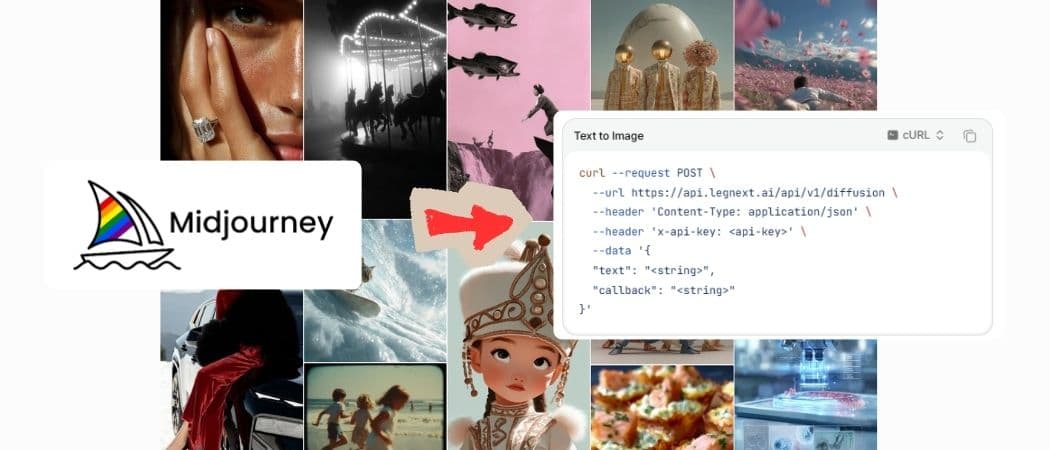
Midjourney is exceptional at generating visually stunning images — but that alone doesn't make it a production tool.
For developers, agencies, and teams running AI-driven workflows, the real challenge isn't creating one beautiful image.
It's generating consistent image sets, with:
- identical subject fidelity
- identical framing rules
- identical lighting language
- identical style DNA
- identical behavior across teammates, batches, and weeks
This is why Midjourney prompt writing is no longer a creative hobby. It has become operational engineering.
And because Midjourney still relies on a Discord-based interface with no official Midjourney API, teams struggle to scale, log, version, and reproduce prompts at a professional level.
This article explains how to turn Midjourney prompts into reproducible specifications — and how Midjourney API alternatives such as Legnext.ai help developers replace manual Discord workflows with stable, programmatic pipelines.
1. Why Production Teams Struggle With Midjourney Consistency
Midjourney is expressive and powerful, but also extremely sensitive to ambiguity.
The same prompt can produce widely different results due to:
- parameter drift
- subtle lighting interpretation differences
- randomness in subject placement
- changing model versions
- Discord chat context
- stylization variability
In production environments, "close enough" is not acceptable.
You must be able to:
- re-run the same prompt
- days or weeks later
- with the same results
This is only possible with structured Midjourney prompts and programmatic controls.
2. What "Optimizing a Midjourney Prompt" Actually Means
Optimizing a Midjourney prompt does not mean:
- ✘ Adding more adjectives
- ✘ Using "magic words"
- ✘ Writing long poetic instructions
True prompt optimization means converting a prompt into a visual specification — a reproducible blueprint that behaves identically every time.
A production-ready Midjourney prompt must include:
- ✔ AI Comprehension
Clear intent: subject, scene, camera logic, lighting. - ✔ Composition Stability
Subject placement and framing should not drift between runs. - ✔ Controlled Randomness
Chaos only when wanted — not accidental. - ✔ Style Consistency
The "visual DNA" must remain stable across projects. - ✔ Exclusions
Explicit "no-go zones": no text, no logos, no watermarks, no extra characters. - ✔ Reproducibility
Identical output across repeated runs, versions, and API calls.
In other words, an optimized Midjourney prompt is a contract, not a message.
3. The Most Common Midjourney Prompt Mistakes (And How to Fix Them)
Mistake #1: Prompts That Are Too Short
Example:
"Just show me the object."This leaves Midjourney to decide everything:
- background
- lighting
- camera angle
- props
- mood
- and even unintended additions
Good for exploration. Bad for production.
Mistake #2: Emotional or Abstract Instructions
Example:
"Make it premium.""Premium" is not a visual instruction. Define it as measurable components:
- soft diffused key light + rim separation
- clean background, no clutter
- symmetrical hero composition
- controlled reflections / polished surfaces
Mistake #3: No Structural Logic
Example:
"Object on surface with light."Missing:
- subject hierarchy
- camera logic
- lighting plan
- environmental constraints
The result: inconsistent batches.
Mistake #4: Parameter Drift — The Hidden Midjourney Killer
Changing these will alter the entire visual output:
- aspect ratio
- stylization
- model version
- variation strength
- seed settings
Prompts alone cannot guarantee consistency. Parameter discipline is mandatory.
4. How to Write a Production-Ready Midjourney Prompt
To build reproducible Midjourney prompts, think in components, not sentences.
- ✔ Subject Specification
What is the object? Material, shape, color, non-negotiable details. - ✔ Environment / Background Rules
Studio? Outdoor? Product surface? Clean? Dark? - ✔ Camera Logic
Angle, focal length, distance, composition. - ✔ Lighting Blueprint
Key → fill → rim → diffusion → contrast. - ✔ Style Limits
Photorealistic? Cinematic? Studio? What must not be used? - ✔ Exclusions
"No text, no logos, no watermarks, no extra characters." - ✔ Locked Controls
seed, aspect ratio, model version, stylization
5. Is There a Midjourney API? (Real Answer)
✔ Short answer:
No — Midjourney does not offer an official public API.
Midjourney's workflow is tied to:
- Discord commands
- chat-based UI
- manual interactions
This creates production bottlenecks:
- team workflows are hard to standardize
- settings drift is easy
- complex logs/version control impossible
- no batch generation
- no headless rendering
- no automation
- no programmatic reproducibility
This is why developer teams require Midjourney API alternatives.
6. Midjourney API Alternatives: Why Legnext.ai Works for Production
Legnext.ai is not a new diffusion model. It is a programmatic pipeline that provides developers with Midjourney-grade image quality, but with:
- a clean REST API
- SDKs for app integration
- seed consistency
- reproducible runs
- batch rendering support
- logging, versioning, and parameter locking
- no Discord dependency
⭐ Key Benefits
- ✔ Midjourney-level image quality
Without Discord's limitations. - ✔ True API workflow
Works inside apps, tools, and engineering pipelines. - ✔ Reproducible generations
Crucial for product-line visuals, campaigns, and versioning. - ✔ Usage-based pricing
Predictable cost control for large-scale production. - ✔ Developer-focused documentation
Quick implementation for engineering teams.
⭐ Legnext.ai vs Standard Midjourney (Discord)
| Feature | Midjourney (Discord) | Legnext.ai (API) |
|---|---|---|
| Official API | ❌ None | ✔ Yes |
| Reproducibility | Low | High |
| Batch generation | Manual | Automated |
| Parameter logging | No | Yes |
| Integration | Difficult | Straightforward |
| Scalability | Limited | Enterprise-ready |
For any team needing production stability, Legnext.ai acts as the practical Midjourney API.
7. FAQ: Real User Questions About Midjourney Prompts & Midjourney API
Q1. Does Midjourney have an official API?
No. Midjourney has no public API and relies entirely on Discord.
Q2. How do developers use Midjourney programmatically?
You need a Midjourney API alternative such as Legnext.ai, which enables:
- REST API calls
- batch runs
- parameter locking
- reproducibility
Q3. How do I make Midjourney prompts consistent?
Use:
- structured prompts
- negative prompts
- locked seeds
- controlled lighting
- stable aspect ratios
- consistent model versions
Q4. What is the best way to write a Midjourney prompt?
Define:
- subject
- camera logic
- lighting blueprint
- style constraints
- exclusions
Avoid emotion-based or abstract instructions.
Q5. Why do my Midjourney results drift over time?
Drift usually comes from:
- model version changes
- stylization changes
- randomness/chaos
- Discord context
- unstructured prompts
Final Thoughts: From Guesswork to Engineering
To make Midjourney suitable for production, teams must combine:
- structured prompts
- locked parameters
- programmatic pipelines
- API-style automation
Legnext.ai enables teams to step beyond manual Discord workflows and adopt a stable, reproducible, developer-friendly Midjourney workflow.
If you want Midjourney-grade image quality with professional consistency, the solution is clear:
→ Stop guessing. Start engineering your Midjourney prompts — and run them through an API built for production.
Ready to get started? Create your API key or check out our pricing plans.